Duct Cleaning · Street
From the the High Street cafes to the Clarks Village restaurants and the care homes, Street runs on ductwork you never see - grease extract, dry ventilation and laundry runs where the dirt, and the fire risk, sit concealed above the ceiling.
Answer a few quick questions about your Street canopy, filters and ducting for a guide price on stripping and degreasing the extract system - no measuring, no site visit.
Try the cost calculatorStreet runs more ductwork than the town lets on. The pubs, cafes and restaurants, and the care homes, push grease-laden air up through kitchen extract; the offices, the Clarks Village units and the Gravenchon Way estate workshops depend on dry supply and extract air-handling; and the town's hotels and launderettes run laundry ducting that packs with lint.
Above most of those kitchens runs an extract a surface wipe never reaches. Street sits under Somerset Council and its 6,040 rated premises - and a grease duct is a fire risk as much as a hygiene one. The Regulatory Reform (Fire Safety) Order 2005 puts it on the responsible person to keep that run clean to a provable standard.
We clean and certify the whole system - grease, dry and laundry - right across Street: the High Street and Clarks Village, Strode College and the Crispin end of town, and the Gravenchon Way and Brookside estates. We survey the full route, fit compliant access where a sealed run has none, and clean every internal metre back to bare metal.
TR19 Grease is the benchmark insurers and fire risk assessors expect for kitchen extract systems. It covers the whole system, measured, not just the parts you can see. Grease is assessed by thickness, and the standard sets the level at which a system must be cleaned and re-tested.
Across Street we work to that one standard, whether the run climbs out of a busy restaurant kitchen or a care-home laundry.
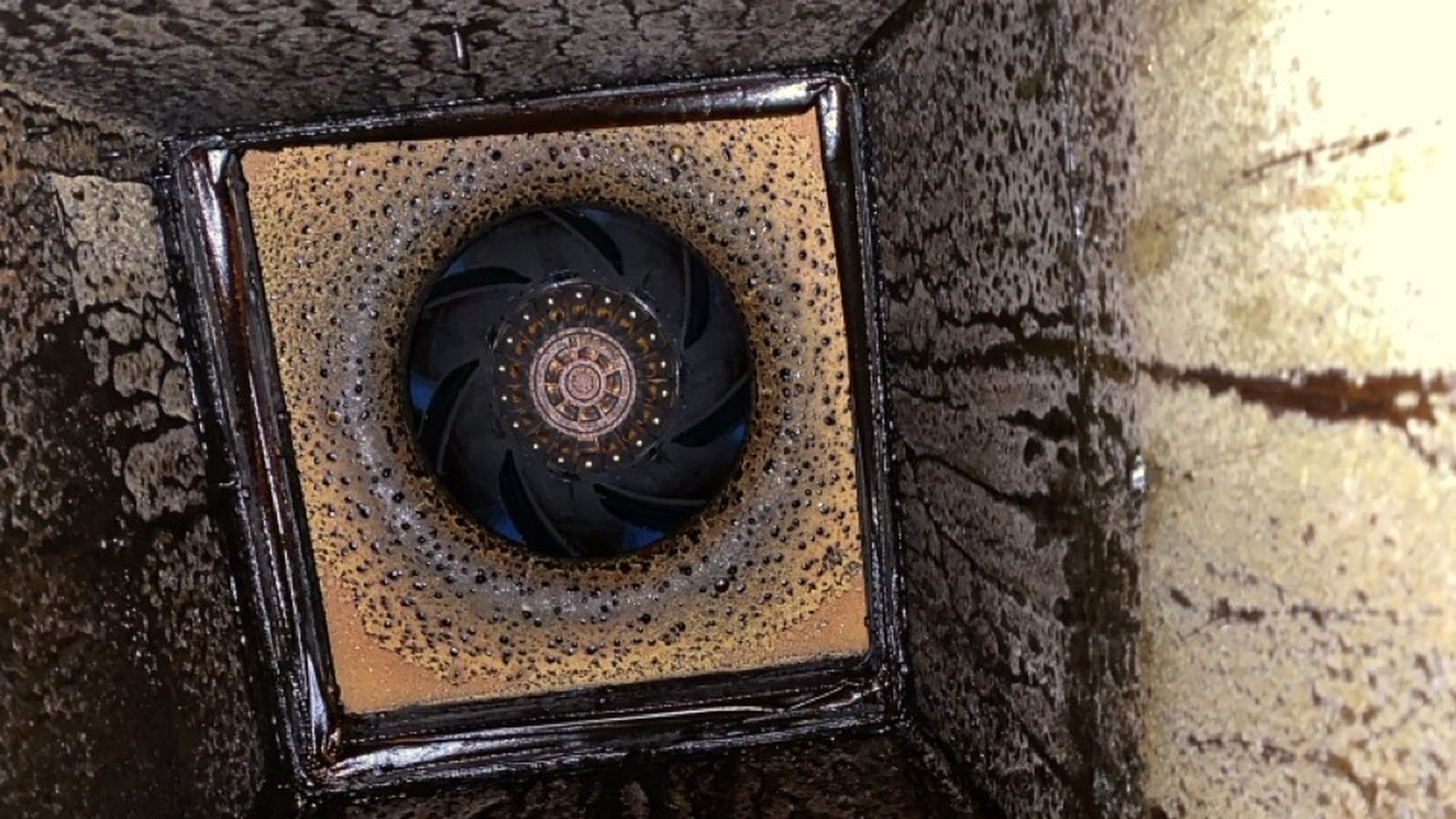
The greasy extract from a cookline is the run that carries real fire risk. We clean it canopy to fan, down to bare metal, and log grease-depth readings at set points.
Dry ventilation ductwork chokes on dust and debris, so it works harder and moves less air. We clean and inspect it so airflow and air quality come back.
Lint-packed dryer and laundry ducting is among the most flammable build-ups on any site. We clear it and check it, before it becomes the ignition source.
Typical jobs we handle, by sector and area - representative of the work we do, not named clients.
At a restaurant unit in the Clarks Village outlet at Street, a standing TR19 schedule keeps the grease run clear here. We cleaned the canopy, filters and accessible run and took fresh grease-depth readings, dating the certificate with the next clean due.
At a care home in Street, one hood fed a brief run to a roof fan and it was quietly overdue a clean. We worked the hood, baffles and short run back to clean metal, with a certificate and before-and-after photographs for the fire file.
We trace the whole route, find where access is missing and set the scope and interval to your cooking hours.
Compliant hatches go in where the run is sealed, and the area is sheeted and protected.
The full run is cleaned to bare metal, with grease-depth readings taken as we go.
You receive the certificate, the readings, the photographs and a next-due date for the logbook.
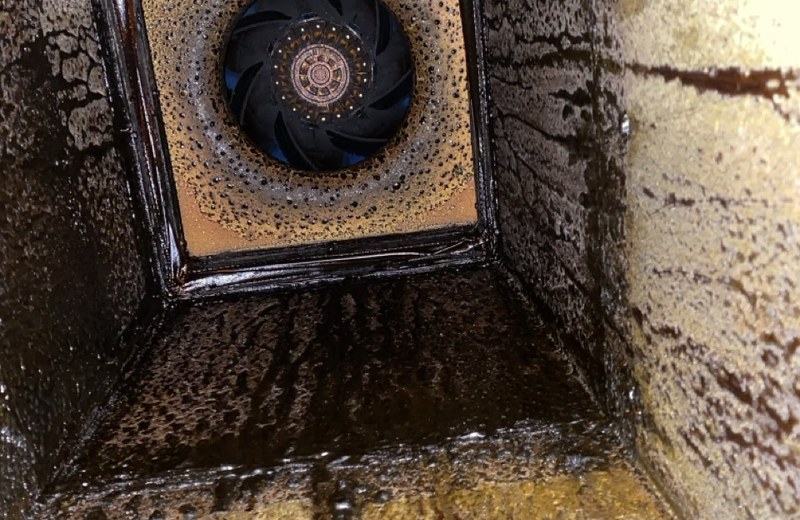
The building. The Fire Safety Order puts the duty on the responsible person to control fire risk, and concealed grease is where a kitchen fire spreads fastest and least visibly.
The claim. Insurers expect a current certificate; a fire claim on a neglected system can be cut or refused - a costly surprise after a loss.
The day-to-day. A clean run pulls better, smells better and stands up when the environmental health officer visits.
Street grew around the Clarks shoe works and keeps the company headquarters and the Clarks Village outlet that draws millions of visitors a year, a town whose High Street cafes, the outlet restaurants and Strode College keep it fed and working. The kitchens that feed the town cook hard, and the grease their extract carries banks unseen in the concealed run. We work around service so a Street kitchen is cleaned, certified and back in action without losing covers.

Yes. We work throughout Street and the wider Somerset, including the High Street and Clarks Village, Strode College and the Crispin end of town, and the Gravenchon Way and Brookside estates. Call 07961 915018 or use the contact form and we will confirm and quote.
The whole run - from the canopy through the concealed horizontal and vertical ductwork to the roof fan. The hidden sections are exactly where the grease and the fire risk sit.
We fit compliant access panels where the run is sealed or boxed in, so every internal section can be reached, cleaned, inspected and certified.
It depends on use. TR19 Grease sets kitchen extract frequency by daily cooking hours - roughly every three months for heavy use, six for moderate and twelve for light - and we set your interval and next-due date on the survey.
Yes. Dry supply and extract ductwork clogs with dust and can spread contamination, and laundry and dryer ducting packs with highly flammable lint. We clean and certify all three.
Yes. We work overnight, early mornings, weekends and closing days to keep your kitchen or site running.
We have cleaned and certified commercial ductwork since 2001, the length of the Somerset coast and across the UK. Whatever the run - a grease riser, a dry office system or a care-home laundry duct - the work ends the same way: bare metal, a photo record and a certificate that stands up to a fire risk assessment.
Send us your site details and cooking hours and we will survey, quote and certify - across Somerset.
