Kitchen Deep Cleaning · Clitheroe
From the gastropubs about the castle to the farm-shop and school kitchens across the valley, a Clitheroe deep clean reaches what a nightly close-down never does - the equipment inside and behind, and the structure an inspection actually scores.
A few quick questions about the canopy, filters and ducting in your Clitheroe kitchen and you will have a guide price for the extraction clean - no measuring, no site visit.
Try the cost calculatorRibble Valley Borough Council rates 647 premises across the borough, and in Clitheroe - a town that trades hard on the valley's food name - the number on the door is the first thing a customer checks. The town eats out about the castle and along Whalley Road, in the delis and cafes of the centre, and in the country inns and farm shops out towards Waddington and Pendle. Every one answers to the same inspection standard, whether it plates a hundred covers a day or feeds a single shift.
A deep clean is what stands behind a good rating when the Clitheroe inspector arrives. We clean well beyond a nightly close-down - the surfaces, the equipment inside and behind, and the structure, from a greased canopy over a gastropub range to the grouting under a farm-shop kitchen - to the standard an environmental health inspection actually scores.
How food is prepared, cooked, cooled and stored. A deep clean removes the ingrained grease and debris that undermine safe handling in the first place.
The state of the structure and equipment - the area a scheduled deep clean is built to defend, and the one you can most directly influence before an inspection.
Your systems and records. A dated deep-clean certificate and photo record is exactly the due-diligence evidence that supports this score.
The daily clean keeps you trading; the deep clean is what stops standards drifting between inspections. It strips back the equipment interiors, the high and low surfaces and the drainage the close-down cannot reach, and returns the kitchen to a baseline an inspector recognises.
From a single independent cafe to a care-home production kitchen, we work around your service - overnight or on a closing day - and leave a dated record of exactly what was done.
Real jobs, described by sector and area - never by a client's name.
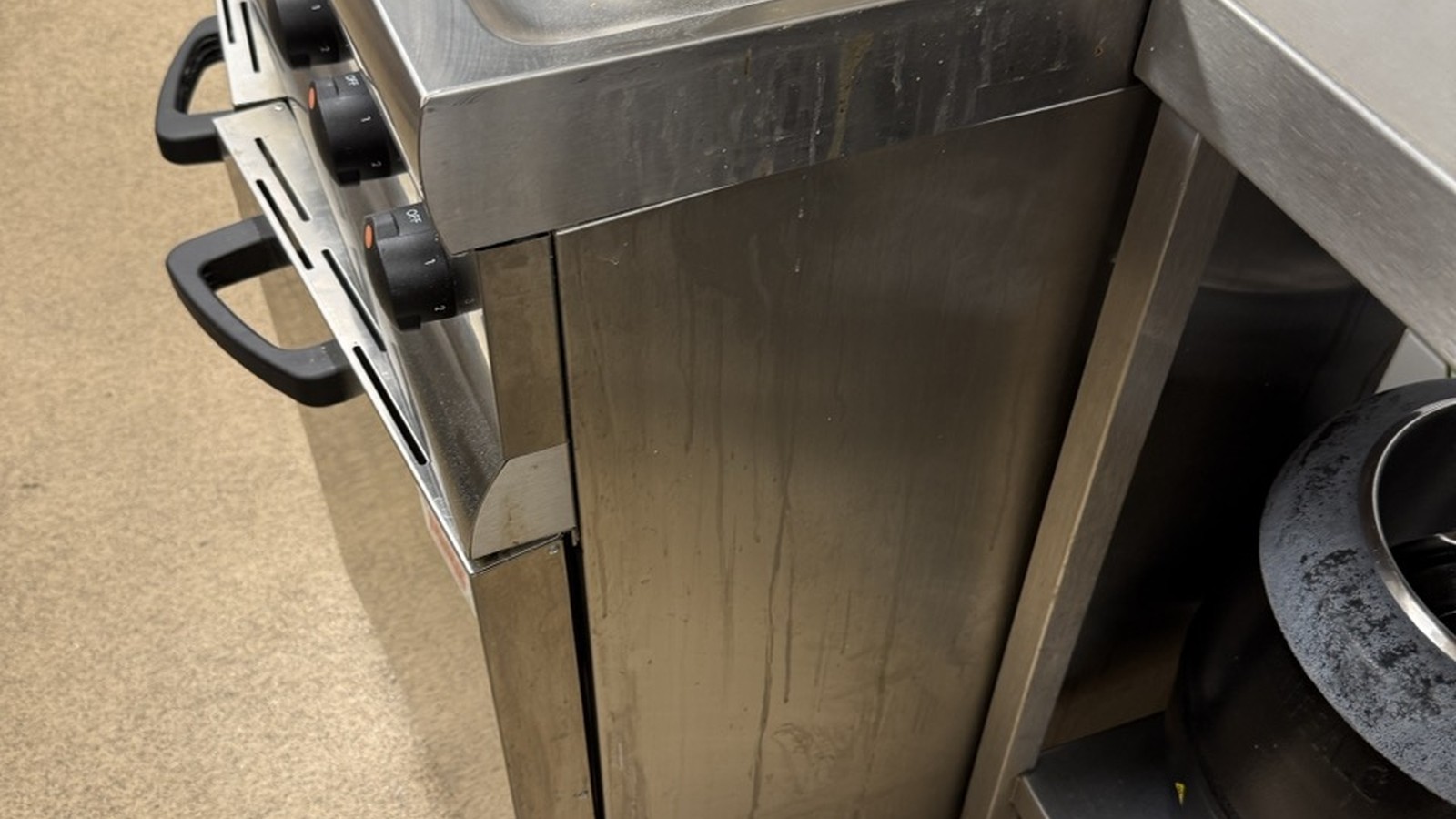
A gastropub near the castle, busy on the valley's dining trade, had carbon baked onto the range and grease worked into the wall junctions and floor gullies behind the line. We stripped and decarbonised the cooking suite, degreased the canopy and filters, and sanitised the surfaces, drainage and cold room. It came back bright and food-safe, with a certificate and photographs for the due-diligence file.
A farm-shop cafe out on the valley roads, run hard through the weekends, had a grease build-up across the cook line and heavy carbon on the salamander. We worked through the whole kitchen - equipment inside and out, walls, floors and the extract - on a closed day, and handed over a report, photos and a certificate for the maintenance log.
The best time to deep clean is before you need to - ahead of an inspection, before a change of operator or lease handover, or on a set interval that matches how hard the kitchen works. A kitchen running flat out through a busy season carbonises far faster than a quiet service, so we set a frequency to your real cooking volume rather than a calendar guess, and slot the work into a closed day so you lose no covers.
We assess the kitchen, agree the scope and schedule around your trade - typically a night or a closing day.
Equipment is opened up and prepared, and the area protected, so the interiors and awkward gaps can be reached.
Equipment, surfaces, floors and drainage degreased, descaled and sanitised to inspection standard.
You get a dated certificate, photographs and a recommended re-clean interval for your records.
Daily cleaning keeps surfaces usable between services. A deep clean reaches what that never does - behind and beneath fixed equipment, inside ovens, fryers and extraction canopies, and across walls, ceilings and floor junctions. It is the part of a Clitheroe kitchen an environmental health inspection actually looks at.
It depends on the kitchen - a small centre cafe is usually a night, a country inn or farm-shop production kitchen several. We scope it on the walk-round and work around your service so you lose no covers.
Yes - the canopy, its baffle filters and the visible run come with the deep clean, which matters most on a heavy gastropub line where the canopy carbonises fastest and the inspector looks first.
Yes - from the castle and town centre to Waddington Road, Whalley Road and the Salthill estate, and across the wider Ribble Valley.
Yes. We work overnight, early mornings or on closing days, and across consecutive nights where a site has to stay open. There is no extra charge for out-of-hours work.
A schedule of the work done and before-and-after photographs, plus a certificate you can hand to a landlord, an incoming operator or a council environmental health officer.
Clitheroe trades on being at the heart of one of England's best-fed valleys - the Ribble Valley Food Trail threads farm shops, dairies, smokehouses and inns through the countryside under Pendle Hill, and the crowds it draws keep the town's kitchens working. Every one is scored on the same Food Hygiene Rating scale, and a spotless canopy, filter bank and extraction run is exactly what an inspector expects to find behind the counter.
We have deep-cleaned commercial kitchens to environmental-health standard since 2001, across Ribble Valley and the UK. From a single cafe to a care-home production kitchen, the job ends the same way: a kitchen reset to inspection standard, with the certificate and photographs to prove it.
Tell us your kitchen and your service pattern and we will scope, quote and deep clean around you - across Ribble Valley.
