
LEV Testing · Shoreham-by-Sea
Shoreham Port and Brighton City Airport run marine, aviation and engineering trades raising fume, mist and dust the law says must be controlled. We examine and test local exhaust ventilation to HSG258 and certify it.
Shoreham-by-Sea works a busy commercial port and one of the oldest airports in the world, and the boatyards and chandleries of Shoreham Port and the hangars and workshops of Brighton City Airport carry marine and aviation trades. Their welding and fabrication bays, resin and paint shops and machining benches all raise something their local exhaust ventilation has to capture at source.
LEV is tested hard by marine and aviation work and quietly loses its edge - filters load, ducts fur, a fan tires - until a hood stops holding the exposure. We carry out thorough examination and testing to HSG258 across Shoreham-by-Sea: measured capture and face velocities at the working points, a judgement against how the system was meant to perform, and a label carrying a next-due date you can trust.
CNC and manual machining raises oil mist and metal dust at the enclosure and bench that has to be captured at source.
Flour, powders and steam need capture at the mixing and process points, from bakeries to production kitchens.
Saws, sanders and routers throw fine wood dust that has to be drawn off at the tool and the bench.
Weld fume and grinding dust need capture at the arm and booth, wherever steel is fabricated.
Bodyshop spray booths and prep bays carry paint mist and solvent vapour that the extraction has to hold and clear.
Fume cupboards, safety cabinets and dental and salon extraction all count as LEV and all fall due on the same clock.
Real jobs, described by sector and area - never by a client's name.
In a Shoreham Port boatyard, the extraction over the resin and paint work needed its thorough examination. We measured capture at the working points and booth airflow, found one reading down, set the fix, and re-tested before certifying.
A workshop at Brighton City Airport needed its weld-fume and machining-mist extraction testing. We measured capture at the arm and enclosures, checked the airflow, and labelled the plant with the readings and next-due date.
Condition of hoods, ducting, filters and fan - the damage, blockage and wear that quietly drops performance.
Measured capture and face velocities at the working points, plus transport velocity and static pressure through the system.
The readings assessed against how the LEV should perform to actually control the exposure - not just whether the fan turns.
Where the process warrants it, sampling to confirm the control is keeping the substance out of the breathing zone.
The point of a thorough examination and test is to prove the extraction still controls the exposure - so we measure it, we do not eyeball it. Condition, capture and face velocities, transport velocity and static pressure are checked against the design intent under HSG258, and the result is written up and labelled on the plant.
We test to the HSE's guidance, HSG258, and the job ends in a report and a label on the plant: what was measured, what passed, what needs putting right, and the date the next test falls due.
We inspect the system's condition - hoods, ducting, filter and fan - and identify how it is meant to control each process.
We take the readings: capture and face velocities, duct transport velocity and static pressure at the key points.
We assess the readings against the benchmark and set out clearly whether the system is controlling the exposure.
The system is labelled with the test result and next-due date, and you get the report for your COSHH file.
At least every 14 months for most systems, sooner for higher-risk work such as resin and paint spray. We match the interval to the process and label the next-due date on the plant.
The condition of hoods, ducts, filters and fan, and measured capture, face, transport and static-pressure readings - all weighed against how the LEV should perform to control the exposure.
We set out what failed and why, usually a single reading, so it can be corrected, then re-test to confirm control before certifying.
Yes - the marine, aviation and engineering units across Shoreham-by-Sea, and the wider West Sussex.
No - resin and paint spray, weld fume, machining mist, metal and wood dust and fume cupboards all fall under the same duty.
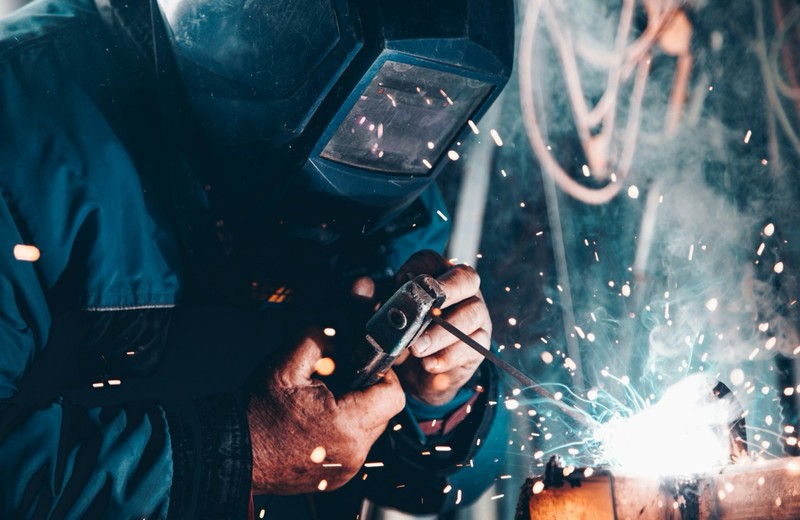
Shoreham Port and the airport carry the town's marine, aviation and engineering trades, the fume, mist and dust drawn off wherever it is raised. We test to HSG258 so those workshops can prove their extraction holds what their people would otherwise breathe.
We have carried out LEV thorough examination and testing to HSG258 since 2001, across West Sussex and the UK. From a machine shop to a joinery, a spray booth or a lab fume cupboard, the job ends the same way: measured readings, a clear verdict, and a label whose next-due date you can rely on.
Tell us what you run and we will examine, measure, report and label it to HSG258 - across West Sussex.
