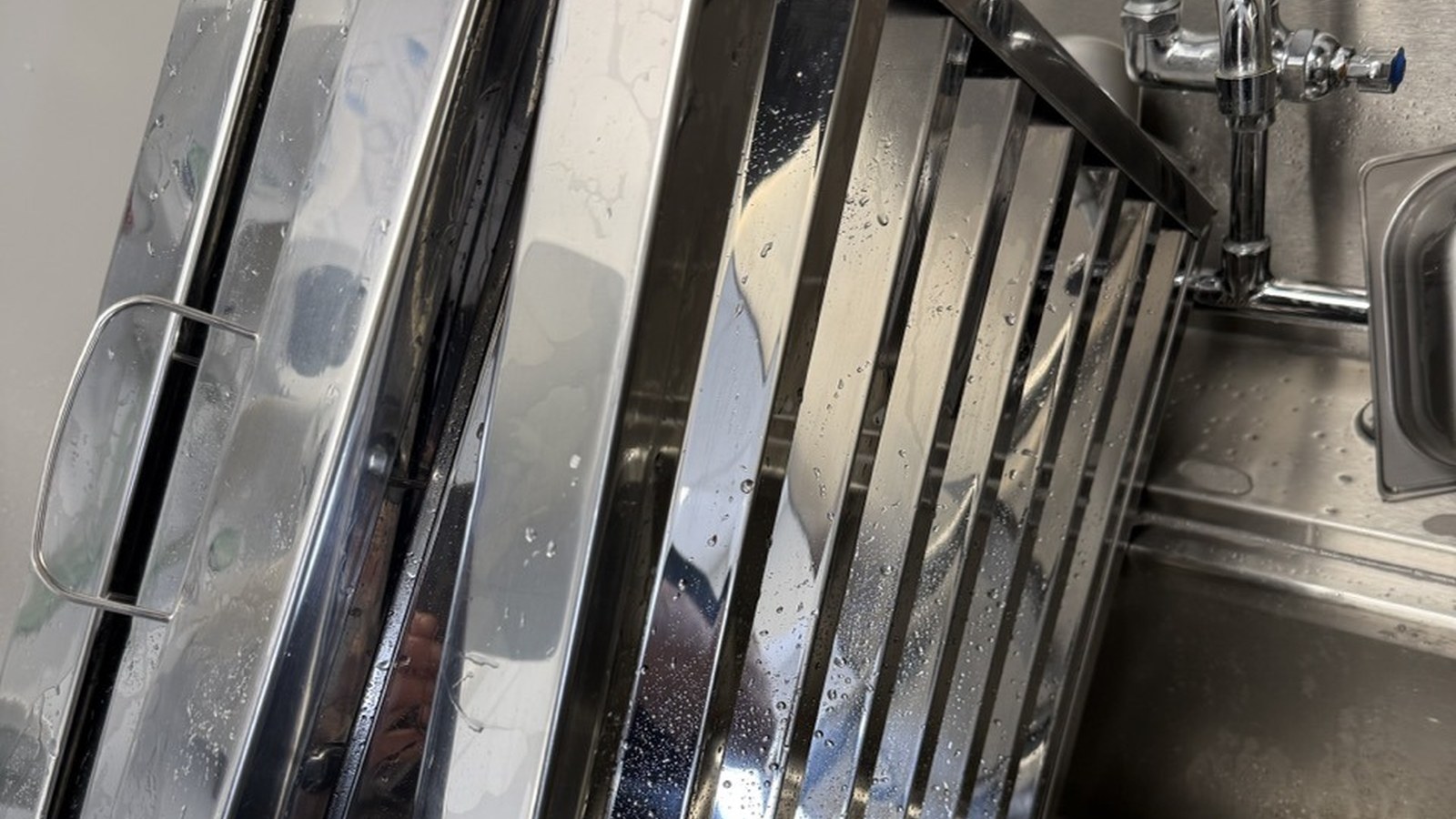
Extraction Cleaning · Litherland
From the the Hawthorne Road cafes to the town-centre pubs, Litherland cooks over open flame - and a greased-up canopy, filter and fan pull badly, run hot and add fire risk. We strip and degrease the whole system, canopy to fan, and certify it fire-safe.
Tell us about the canopy, filters and ducting in your Litherland kitchen and get a guide price straight away - no measuring, no site visit, no waiting.
Try the cost calculatorFrom the Hawthorne Road cafes to the town-centre pubs, Litherland runs its cooklines hard, and each one faces the same thing - grease building on the canopy service after service. The settings change; the grease does not.
One of 2,366 rated premises in the area, a Litherland cookline packs grease onto its canopy, filters and fan day after day. When it sets, the hood stops pulling at the line, the kitchen goes hot and smoky, and the caked filters and fan become a fire risk over an open flame. We strip and degrease the lot so the airflow and the fire safety return.
Swapping filters treats the symptom; grease in the canopy, plenum and fan is what actually strangles the airflow. Clean the lot together and the cookline captures again, the kitchen runs cooler, and the fire risk over a live line comes down with it.
It is measured and evidenced to TR19 Grease, with the fan the tell: when a Litherland kitchen goes hot and smoky, it is usually grease unbalancing the impeller, not the filters.
The standard on a commercial canopy. We strip, soak and scrape them back, and flag any that are warped or missing - the gap a warped filter leaves lets grease straight into the plenum.
Common on lighter lines and older canopies, and quick to clog solid. We clean what you run and advise where a baffle filter would serve a heavy frying line better.
On enclosed or recirculating systems. We service the stages, check the seals and tell you what needs replacing rather than cleaning.
Many cooklines carry a wet-chemical system built into the canopy. We degrease the filters, canopy and fan without disturbing the nozzles or detection - so you keep both defences.
Where a gas interlock ties the cookline to the extract, we work around it and leave it functioning, so the line cannot fire without the extraction running.
We check and clear accessible fire dampers in the run, so a damper that has to close in a fire is not seized solid with grease.
Typical jobs we handle, by sector and area - representative of the work we do, not named clients.
At a residential home in Litherland, cooking daily for its residents, grease had built from the baffles back to the impeller and the canopy no longer pulled the line clear. We took the canopy, filters and plenum back to clean metal and degreased the fan and the accessible run overnight. The airflow and the fire safety came back, certified with before-and-after photographs.
At a primary school in Litherland, cooking hot lunches at volume through term, the kitchen had gone hot and smoky mid-service as grease loaded the canopy, filters and fan. We cleared the filters and canopy, scraped back the plenum and accessible run, and degreased the impeller between services. The cookline drew properly again, certified with before-and-after photos.
We survey the canopy, filters and fan and gauge the grease loading and how far airflow has dropped.
The line and any suppression system are protected and the area covered before we start.
The whole system is degreased - filters, canopy, plenum and fan - twice over where grease is baked on.
You get the certificate, the before-and-after photographs and a recommended re-clean date.

By cooking volume. A heavy line needs cleaning more often than a light one - TR19 Grease sets the interval by daily cooking hours, and we assess your grease loading and set a next-due date rather than guessing.
The whole system - filters, canopy, plenum, fan housing and impeller, and the accessible duct. Grease on the fan is usually what has actually killed the airflow, so filters alone rarely fix a hot, smoky kitchen.
No. We degrease around the nozzles and detection of a wet-chemical system without disturbing them, so both the extraction and the suppression are left working.
Yes - Hawthorne Road and the town centre, the Leeds-Liverpool Canal, and the sports park and the Bootle edge, and across the wider Merseyside.
Yes. We work overnight, early mornings and closed days, at no extra charge for out-of-hours work, so the kitchen is ready for the next service.
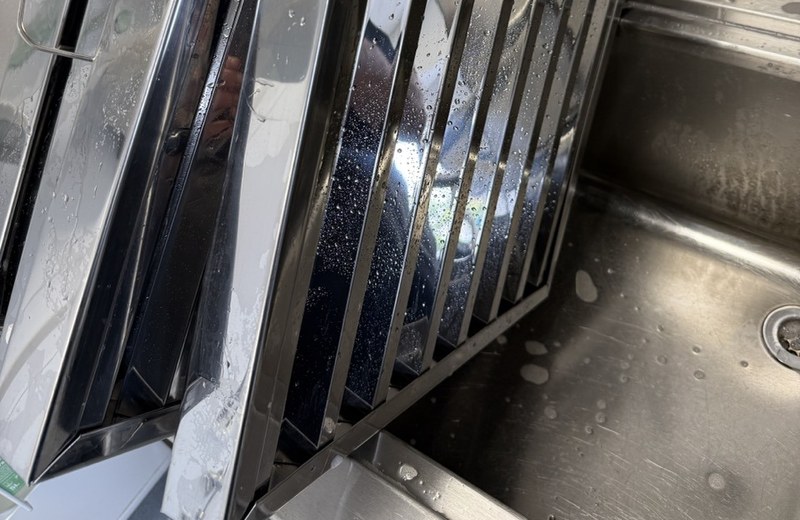
Litherland lines the Leeds-Liverpool Canal north of Bootle around Hawthorne Road, a residential township whose cafes, pubs and takeaways feed the area. Left in place, that grease feeds flame and starves airflow. We work around service so the extraction is clean, certified and pulling properly before the next service.
We have stripped, degreased and certified commercial extraction to TR19 Grease since 2001, across Merseyside and the UK. On a hard-frying line the job is the same every time: the whole system taken back, the fan balanced, and a certificate that satisfies your insurer and fire risk assessor.
Send us your cookline and frying hours and we will survey, strip, degrease and certify - across Merseyside.
